Peptides vs retinol
South Beach Skin Lab vs RoC Retinol: Peptides vs Retinoids for Skin Over 50
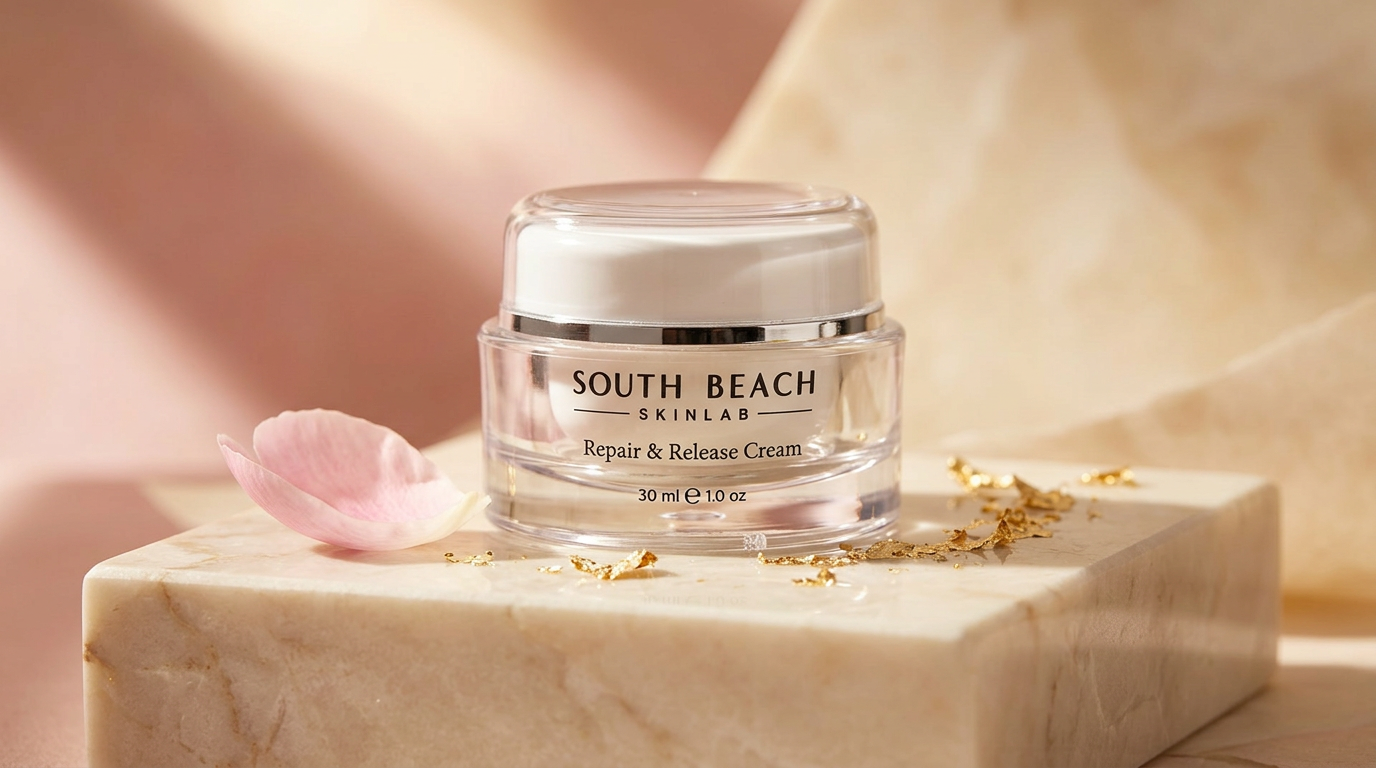
Affiliate link · We may earn a commission
Quick Verdict
| South Beach Skin Lab | RoC Retinol Correxion | |
|---|---|---|
| Active mechanism | Peptide complex (5 peptides) | Retinol (vitamin A derivative) |
| Irritation risk | Very low | Moderate to high |
| Suits sensitive skin | ✅ Yes | ❌ Generally no |
| Sun sensitivity increase | ❌ No | ✅ Yes — SPF required |
| Fragrance-free | ✅ Yes | ✅ Yes |
| Results timeline | 30–60 days | 4–12 weeks |
| Price range | $$ | $ |
| Overall rating | 4.3/5 | 3.8/5 |
Our pick: South Beach Skin Lab for sensitive, reactive, or post-menopausal skin. RoC Retinol for tolerant skin types who want a well-established, lower-cost retinoid option.
Retinol vs Peptides — Understanding the Difference
This is the most important question to answer before choosing between these two products, because they work through fundamentally different mechanisms.
How retinol works
Retinol (vitamin A) converts to retinoic acid in skin cells, where it binds to nuclear receptors and directly upregulates collagen synthesis, accelerates cell turnover, and suppresses the enzymes that break down collagen (MMPs). It is one of the most extensively studied anti-aging actives in dermatology. Prescription-strength tretinoin — the direct retinoic acid form — remains the gold standard for photodamage and fine line reduction in clinical settings.
The limitation: the conversion process and the mechanism of action both produce significant side effects in many users, particularly during the initial adjustment period. Peeling, redness, dryness, and increased sun sensitivity are common. In post-menopausal skin, where the barrier is already compromised and moisture retention is reduced, these side effects are more pronounced and often more persistent than in younger skin.
How South Beach Skin Lab's peptide complex works
Peptides work through cell signalling rather than direct receptor binding. Argireline and SNAP-8 partially inhibit the neuromuscular contractions that deepen expression lines — a targeted mechanism with no skin surface disruption. The Palmitoyl peptide complex mimics collagen fragments that signal fibroblasts to produce new collagen — stimulating the same outcome as retinol through a gentler pathway.
The practical difference: peptides do not cause peeling, redness, or increased sun sensitivity. They can be used daily without an adjustment period. They are safe for the barrier-compromised, sensitive, and reactive skin types that are common in women over 50.
What peptides cannot do that retinol can
For significant photodamage, actinic keratoses, and deep structural wrinkles, prescription-strength retinoids remain clinically superior. Peptides are not a direct equivalent for prescription tretinoin at therapeutic doses. For over-the-counter use, however — where retinol products like RoC operate at far lower concentrations than prescription retinoids — the performance gap is substantially smaller.
Irritation Risk — The Deciding Factor for Many Women Over 50
The irritation profile of retinol is not a minor inconvenience for everyone — it is a genuine barrier to consistent use for a substantial proportion of women with mature or post-menopausal skin.
Post-menopausal skin undergoes significant changes: reduced estrogen levels decrease collagen production, sebum output drops, the skin barrier becomes less efficient, and the skin becomes more reactive to actives. For many women, retinol products that were tolerable in their 30s become difficult to use in their 50s.
RoC Retinol Correxion, used as directed with the recommended gradual introduction protocol, is manageable for women with normal to oily skin types and a robust barrier. For sensitive, dry, or reactive skin — particularly rosacea-prone — the irritation risk makes consistent use difficult. A product you cannot use consistently delivers no results.
South Beach Skin Lab carries no meaningful irritation risk for any skin type. No adjustment period, no peeling phase, no SPF requirement beyond standard sun protection. For women who have found retinol intolerable, the multi-peptide approach is not a compromise — it is the appropriate choice for their skin type.
Results — Timeline and What Each Delivers
RoC Retinol Correxion
Weeks 1–4: Most users experience the retinol adjustment period — some degree of dryness, flaking, or mild redness. Visible improvement is unlikely during this phase. Some users skip this phase entirely with tolerant skin types.
Weeks 4–8: Cell turnover acceleration becomes visible as improvement in skin texture and, in many users, moderate reduction in fine line depth. This is the phase where retinol proves its efficacy for tolerant skin.
Weeks 8–12+: Most significant improvement for consistent users. Photodamage, uneven tone, and fine lines show measurable change with sustained use.
South Beach Skin Lab
Days 1–14: Immediate improvement in hydration and texture. No adjustment period.
Days 15–30: Early improvement in fine line appearance, particularly around the eyes. Skin appears plumper and more even.
Days 30–60: Most significant improvement in fine line depth and early firmness change from the peptide complex. This is the comparison point with retinol's 8-week results.
The honest comparison: For tolerant skin types, retinol may produce slightly faster and deeper results on fine lines in the 8–12 week window. For sensitive or reactive skin, South Beach Skin Lab will outperform retinol in practice — not because it is mechanistically superior, but because it is actually usable. An anti-aging product that causes intolerable irritation provides zero benefit.
Can You Use Both Together?
Yes, with appropriate timing. The combination of peptides and retinol is not contraindicated and can be additive — the peptides address expression lines and collagen signalling while retinol handles cell turnover and photodamage.
Recommended protocol if using both: apply South Beach Skin Lab in the morning and retinol at night. Alternatively, alternate evenings — South Beach Skin Lab on Monday, Wednesday, Friday; retinol on Tuesday, Thursday, Saturday.
Do not apply both in the same application session. Do not apply peptides immediately after low-pH actives without full absorption time in between.
Who Should Choose Which
Choose South Beach Skin Lab if:
- You have sensitive, dry, reactive, or rosacea-prone skin
- You have found retinol intolerable at any point
- You are post-menopausal and your skin barrier is compromised
- You use SPF inconsistently and cannot add an extra requirement
- You want a fragrance-free, clean-label formula without adjustment period
Choose RoC Retinol if:
- Your skin tolerates retinol without significant irritation
- You have noticeable photodamage as a primary concern
- Budget is the primary constraint and you have tolerant skin
- You are under 50 with a robust skin barrier
Consider using both if:
- You have tolerant skin and want to address both expression lines and photodamage comprehensively
Affiliate link · We may earn a commission
Sources & References
Peer-reviewed citations
- [1]Retinol mechanism and anti-aging efficacy — British Journal of Dermatology, 2007
- [2]Retinol irritation in mature skin — Journal of Drugs in Dermatology, 2012
- [3]Post-menopausal skin barrier changes — Maturitas, 2010
- [4]Argireline expression line reduction — International Journal of Cosmetic Science, 2002
- [5]Peptide vs retinol mechanism comparison — Journal of Cosmetic Dermatology, 2018