Science-led guide
Anti-Aging Skincare After 50: What Your Skin Needs and Why
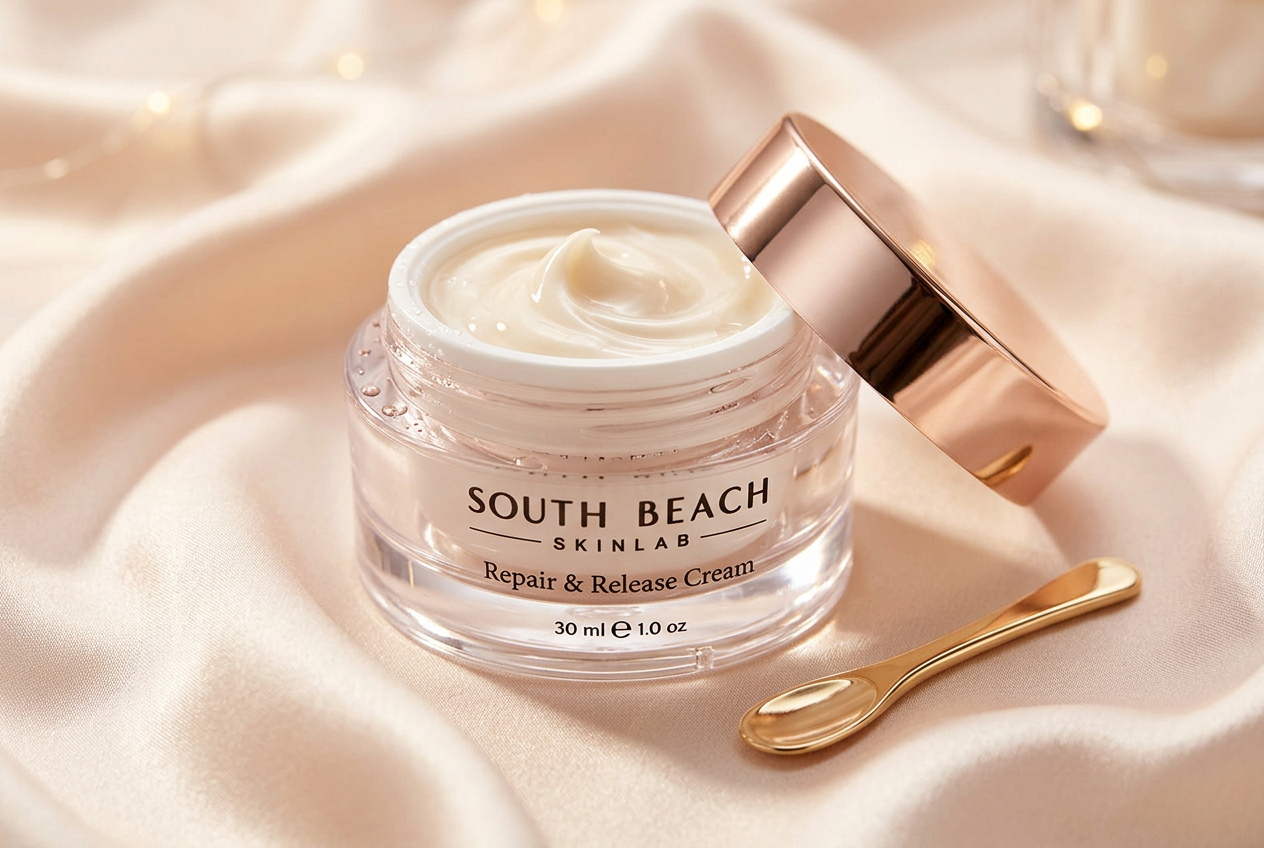
Affiliate link · We may earn a commission
What Actually Changes in Skin After 50
Understanding the biology makes ingredient choices logical rather than arbitrary.
Collagen decline
Collagen is the structural protein that gives skin its firmness and resistance to deformation. From around age 25, collagen production begins to decline. After menopause, the rate accelerates sharply — estrogen plays a direct role in stimulating collagen synthesis, and its decline is reflected in measurable changes to skin structure. Research suggests skin loses approximately 30% of its collagen in the first five years after menopause.
The visible consequence: skin becomes thinner, less firm, more prone to creasing, and slower to spring back after being deformed. Fine lines that previously disappeared on relaxing become permanent.
Sebum reduction
Sebaceous glands are responsive to androgens and estrogen. As both decline post-menopause, sebum production falls significantly — in some women by up to 60% within a decade of menopause. Sebum is not merely cosmetically undesirable in excess: at appropriate levels, it is an essential component of the skin barrier, providing emolliency, water resistance, and antioxidant protection through its squalene content.
The visible consequence: skin becomes drier, more prone to tightness and flaking, and loses the natural plumpness that adequate sebum provides. The skin barrier becomes less effective, and transepidermal water loss increases.
Barrier function reduction
The stratum corneum — the outermost layer of skin — is a complex lipid matrix that acts as the skin's primary barrier against water loss and environmental damage. Its efficiency depends on the ratio and organisation of ceramides, fatty acids, and cholesterol. After menopause, the composition of this lipid matrix changes and its efficiency declines.
The consequence: skin becomes more reactive to external irritants, more prone to sensitivity, and less able to retain moisture applied topically. Products that were well-tolerated in younger skin may begin to cause irritation.
Slower cell turnover
The rate at which new skin cells are produced and old ones shed — the cell renewal cycle — slows from approximately 28 days in young skin to 40–60 days in skin over 50. Slower turnover means dull, uneven skin tone, slower recovery from damage, and reduced responsiveness to some actives.
The Ingredients That Address Each Change
For collagen decline: signal peptides
Palmitoyl Tripeptide-1, Palmitoyl Tetrapeptide-7, and Palmitoyl Tripeptide-5 (the Matrixyl peptide families) directly stimulate collagen and elastin synthesis by mimicking the signalling fragments produced when collagen breaks down. These are the most evidence-backed topical actives for structural anti-aging that do not carry the irritation risk of retinoids.
Retinol and prescription tretinoin also address collagen decline through direct nuclear receptor binding and collagen synthesis upregulation. They are more potent than peptides in clinical terms but carry significant irritation risk that limits their use in post-menopausal skin.
For expression lines: neurotransmitter-inhibiting peptides
Argireline (Acetyl Hexapeptide-8) and SNAP-8 (Acetyl Octapeptide-3) reduce the muscle contractions that deepen expression lines — crow's feet, forehead lines, and frown lines. This mechanism is distinct from and complementary to the collagen-signalling peptides above.
For sebum reduction: barrier-restoring emollients
Squalane is the most relevant ingredient for sebum reduction specifically, as it closely mimics the composition of natural sebum. Ceramides restore the stratum corneum lipid matrix. Fatty acids (linoleic, oleic) replenish the barrier lipids that decline with age. Shea butter provides occlusion and locks in moisture.
For moisture retention: humectants
Sodium hyaluronate draws water into the skin from the environment and deeper skin layers. Glycerin performs a similar function at a lower cost. Both are more effective when combined with an occlusive — a barrier-sealing emollient that prevents the drawn moisture from evaporating.
For cell turnover: vitamin C and AHAs
Ascorbic acid (vitamin C) supports collagen synthesis as an essential cofactor and brightens uneven tone by inhibiting tyrosinase. Alpha hydroxy acids (glycolic, lactic) accelerate cell shedding and renewal — at appropriate concentrations for mature skin, which are lower than for younger skin.
For antioxidant protection: vitamins C and E, niacinamide
Free radical damage from UV and pollution accelerates all of the changes listed above. Topical antioxidants cannot replace SPF, but they mop up the free radicals that UV generates in the skin and provide meaningful supplementary protection.
Building an Anti-Aging Routine After 50 — The Framework
A complete anti-aging routine for women over 50 does not need to be complicated. The core requirement is that it addresses the four biological changes above — collagen support, barrier restoration, hydration, and antioxidant protection — consistently, twice daily.
Morning routine
- Gentle, pH-balanced cleanser — nothing foaming or stripping.
- Peptide moisturizer — apply to slightly damp skin for better penetration.
- SPF 30 or higher — non-negotiable; UV drives collagen breakdown and accelerates all visible aging.
Evening routine
- Gentle cleanser or cleansing oil.
- Optional: vitamin C serum if brightening is a priority (apply first, allow to absorb).
- Peptide moisturizer — the workhorse step for collagen support and barrier restoration.
- Optional: facial oil or balm over the top if skin is very dry.
What to avoid
- High-fragrance products — fragrance is the most common contact allergen in skincare and post-menopausal skin is more reactive.
- Anything foaming with sulfates — strips sebum that your skin is already producing less of.
- Excessive exfoliation — mature skin renews more slowly and over-exfoliation compromises the barrier that is already less efficient.
How to Read Anti-Aging Product Labels After 50
The ingredient list is the only reliable guide to whether a product will do what it claims. Marketing language is unregulated. Clinical claims on packaging are not the same as peer-reviewed clinical evidence.
What to look for
Peptides (Palmitoyl peptides, Acetyl peptides) in the first half of the INCI list, indicating meaningful concentration. Squalane or ceramides for barrier support. Sodium hyaluronate rather than plain hyaluronic acid — the smaller molecule penetrates more effectively. Vitamin C in a stable form (ascorbyl glucoside, ascorbyl tetraisopalmitate) rather than unstable plain ascorbic acid in a jar.
What to be sceptical of
"Collagen-boosting" claims on products containing collagen — topical collagen molecules are too large to penetrate skin and deliver no structural benefit. Stem cell claims — plant stem cells have no established efficacy for human skin aging. Retinol at low concentrations in opaque packaging — retinol degrades rapidly on light exposure and needs airtight, dark packaging to retain potency.
Affiliate link · We may earn a commission
Sources & References
Peer-reviewed citations
- [1]Decreased collagen production in chronologically aged skin — Journal of Investigative Dermatology, 2006
- [2]Sebum changes after menopause — British Journal of Dermatology, 2001
- [3]Skin barrier function and aging — Skin Pharmacology and Physiology, 2006
- [4]Estrogen and skin — American Journal of Clinical Dermatology, 2001