The mechanism
How Peptides Work in Skincare: The Mechanism, the Evidence, and What Actually Matters
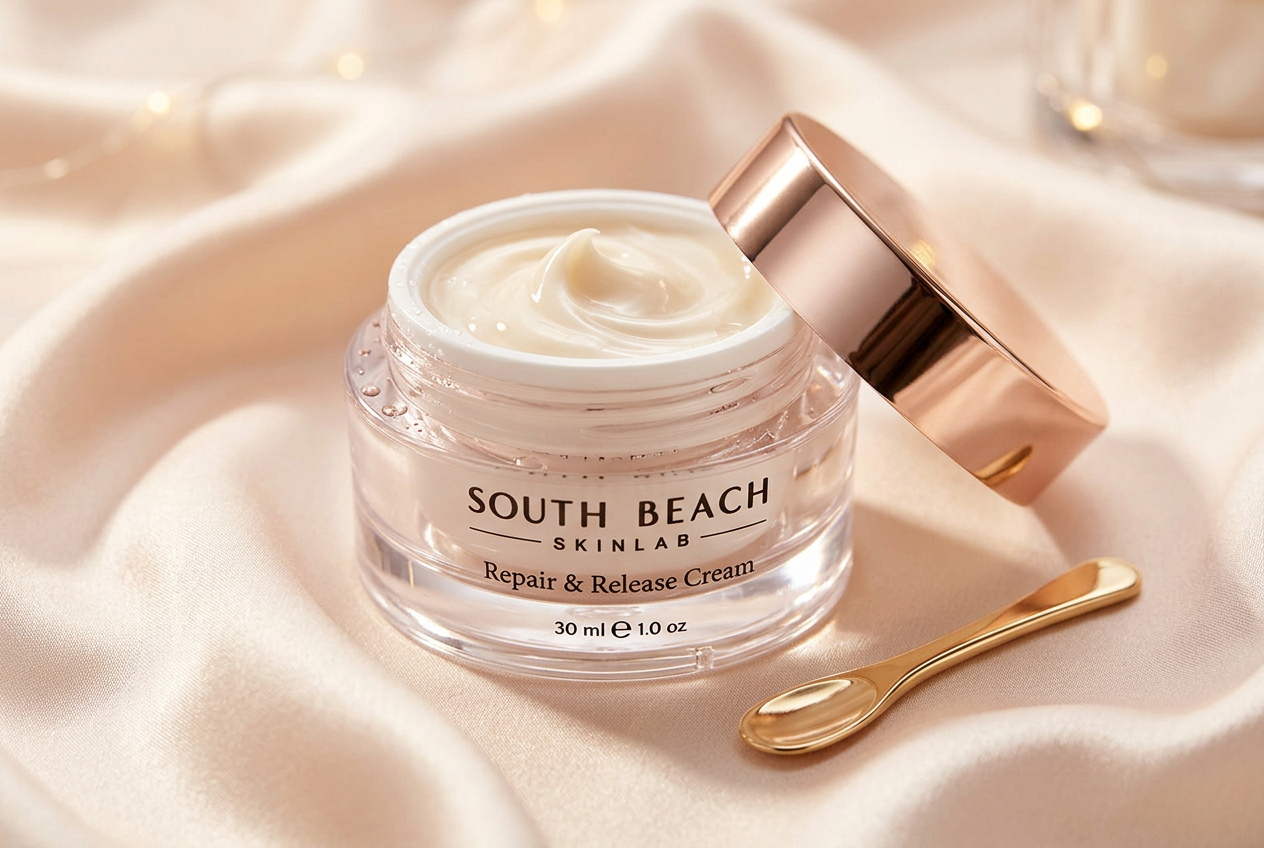
Affiliate link · We may earn a commission
Why Peptides Became Central to Anti-Aging Science
The peptide approach to anti-aging skincare emerged from a specific scientific observation: when collagen breaks down — through UV damage, age, or enzymatic activity — the resulting collagen fragments act as distress signals, telling nearby fibroblasts to produce new collagen to replace what was lost.
This is a natural repair mechanism. Researchers recognised that if topical peptides could mimic these collagen fragment signals, they might be able to stimulate collagen synthesis without the tissue damage that triggers it naturally. The result was the matrikine peptide category — peptides designed to look like collagen breakdown products, triggering the repair response without requiring actual damage.
The commercial introduction of Matrixyl (Palmitoyl Pentapeptide-4) by Sederma in the early 2000s, followed by Matrixyl 3000, brought peptide anti-aging into mainstream formulation. It has since expanded into multiple subcategories with distinct mechanisms.
The Three-Step Process — How a Peptide Gets From Jar to Cell
Understanding why peptide skincare works — and why formulation quality matters — requires understanding the journey from application to biological effect.
Step 1: Penetration
The stratum corneum is the skin's primary barrier — a brick-and-mortar structure of dead skin cells embedded in a lipid matrix. Its function is to keep things out, including ingredients applied topically. Peptides, as water-soluble molecules, face a difficult passage through this lipid-rich barrier.
Formulators address this through several strategies: attaching a fatty acid chain to the peptide (as in the Palmitoyl peptides — the fatty acid increases lipid affinity), encapsulating peptides in liposomes, or using penetration-enhancing solvents. The presence of "Palmitoyl" in a peptide name is a deliberate formulation decision to improve stratum corneum penetration.
Step 2: Receptor binding
Once past the stratum corneum, signal peptides must reach fibroblasts in the dermis — the collagen-producing cells that live deeper in the skin. Here they bind to specific cell surface receptors that recognise their amino acid sequence. This binding triggers an intracellular signalling cascade.
For matrikine peptides, the cascade activates transcription factors that upregulate collagen and elastin gene expression — directly increasing the production of structural proteins.
For neurotransmitter-inhibiting peptides (Argireline, SNAP-8), the target is different: the SNARE protein complex at the neuromuscular junction, where partial binding inhibits acetylcholine release and thereby reduces muscle contraction intensity.
Step 3: Biological response
Signal peptides: increased collagen I, III, and IV synthesis; increased elastin production; sometimes decreased MMP (collagenase) activity. These effects accumulate over weeks of consistent use.
Neurotransmitter peptides: reduced acetylcholine-mediated muscle contraction in expression muscles. This effect is present while the peptide is in use and reverses when discontinued — similar to the reversibility of Botox, but at a much smaller scale.
Why Some Peptide Products Work and Others Don't
Peptides have a reputation in some circles for being "marketing ingredients" — listed prominently on packaging while present at concentrations too low to deliver biological effects. This reputation is earned for some products and undeserved for others.
The key variables that determine whether a peptide product delivers results:
Concentration
Peptides have minimum effective concentrations established in clinical research. Argireline shows measurable effects at 5–10%. The Matrixyl 3000 complex shows effects at approximately 3%. A peptide listed in position 28 of 32 ingredients is almost certainly below these thresholds. A peptide listed in positions 5–10 is more likely to be at a meaningful concentration.
Stability
Some peptides are sensitive to pH, light, or oxidation. A well-formulated peptide product uses appropriate packaging (airless pumps rather than open jars for oxidation-sensitive actives) and a pH range compatible with peptide stability (typically 5.5–7.0).
Penetration enhancement
Peptides without penetration-enhancing modifications face significant stratum corneum resistance. Palmitoyl-modified peptides have better penetration profiles than unmodified versions. Liposomal encapsulation improves delivery further.
Delivery vehicle
The cream, serum, or lotion that carries the peptide affects absorption. A well-designed vehicle delivers the peptide to the skin surface at an appropriate concentration without competing ingredients that degrade or neutralise it.
How Long Do Peptides Take to Work?
This is the question most buyers want answered, and the honest answer depends on which mechanism is involved.
Signal peptides (collagen synthesis)
The collagen synthesis cycle takes time. Fibroblasts require adequate stimulation before upregulating production; newly synthesised collagen takes further time to integrate into the dermal matrix. Most published studies show measurable changes at 8–12 weeks. Subjective improvement in skin texture and fine line appearance is often visible earlier — typically 3–5 weeks — as cumulative peptide exposure builds.
Neurotransmitter-inhibiting peptides (Argireline/SNAP-8)
Effects on expression lines are both immediate and cumulative. Immediate: within hours of application, partial muscle relaxation is present. Cumulative: with sustained use, the reduced muscle activity over weeks and months allows existing expression lines to soften as the creasing stimulus is reduced.
Practical expectation
At twice-daily application, most users notice texture and hydration improvement within 1–2 weeks (from the moisturizer base). Visible improvement in fine lines appears at approximately 3–4 weeks. The most meaningful structural change — firmness, deeper line reduction — is typically visible at 6–12 weeks of consistent use.
Affiliate link · We may earn a commission
Sources & References
Peer-reviewed citations
- [1]Matrikine peptide mechanism — International Journal of Cosmetic Science, 2005
- [2]Palmitoyl peptide skin penetration — Journal of Controlled Release, 2011
- [3]Signal peptide collagen stimulation — Journal of Cosmetic Dermatology, 2009
- [4]SNARE complex and neurotransmitter peptides — Nature Reviews Neuroscience, 2006