Ingredient deep-dive
Shea Butter: The Antioxidant Emollient That Calms and Repairs
Affiliate link · We may earn a commission
What Is Shea Butter?
Shea butter is the fat extracted from the nut of the African shea tree (Vitellaria paradoxa, listed on INCI panels as Butyrospermum parkii). It is approximately 85–90% triglycerides (oleic, stearic, linoleic, and palmitic acids) plus a 5–10% unsaponifiable fraction rich in triterpene alcohols, tocopherols (vitamin E), and phytosterols. That unsaponifiable fraction is what sets shea butter apart from most other plant butters.
How It Works on Mature Skin
After menopause, sebum production drops sharply — roughly 60% in the decade following menopause. The skin barrier becomes more permeable, transepidermal water loss rises, and low-grade inflammation becomes more common. Shea butter addresses all three:
- Barrier repair: the fatty acids slot directly into the stratum corneum lipid lamellae, reducing water loss.
- Anti-inflammatory action: triterpene alcohols (lupeol, alpha-amyrin, beta-amyrin) inhibit pro-inflammatory enzymes in vitro.
- Antioxidant support: the natural tocopherol content gives the fat itself oxidation resistance and contributes vitamin E to the skin surface.
Where Shea Butter Sits in Repair & Release Cream
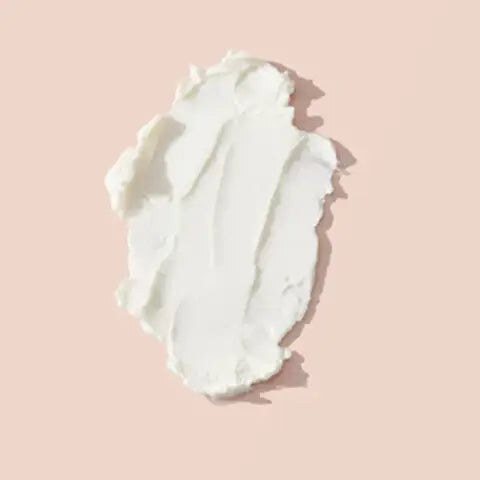
Butyrospermum parkii (shea) butter appears in the upper-middle of the Repair & Release Cream INCI list, above the active peptides. That position reflects its dual role: it is both a meaningful active (barrier repair, anti-inflammatory) and the structural emollient that gives the cream its rich, balm-like cushion.
It pairs naturally with squalane, which delivers the same barrier support in a much lighter, faster-absorbing form. Together they cover both ends of the emollient spectrum.
Who It Suits
- Dry, post-menopausal skin that no longer self-lubricates.
- Skin recovering from retinoid use or winter weather damage.
- Sensitive types who react to fragrance or synthetic occlusives.
Shea butter is rated 0–2 on the comedogenicity scale — low risk for most skin types, though acne-prone skin may prefer the lighter squalane route.
Related on South Beach Skincare Shop
Sources & References
Peer-reviewed citations
- [1]Shea butter and skin barrier function — Journal of Oleo Science, 2010
- [2]Anti-inflammatory activity of shea butter triterpenes — Journal of Ethnopharmacology, 2003